
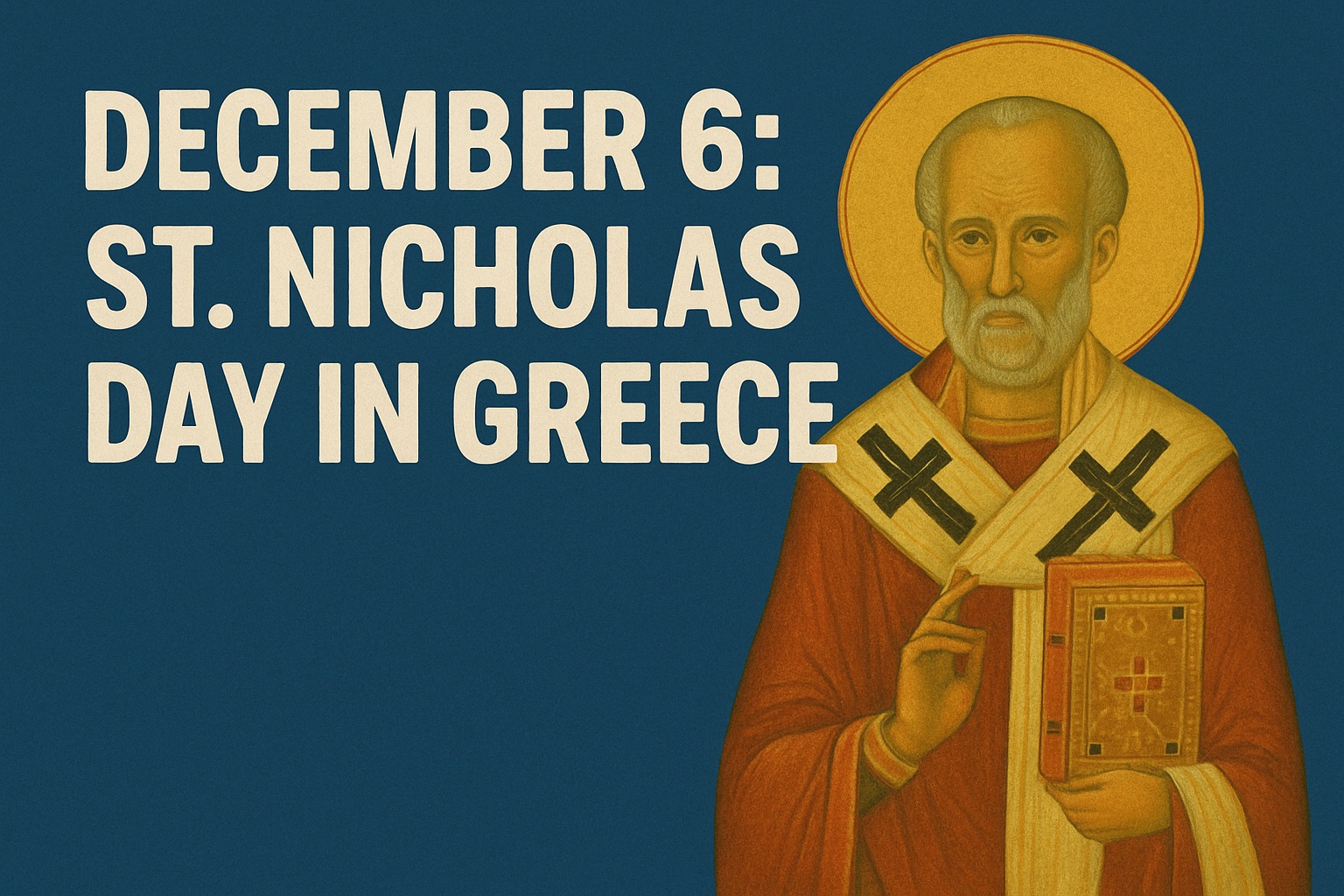
St. Nicholas Day, celebrated on December 6th, is a cherished tradition across Greece. Known as Agios Nikolaos, he is one of the most beloved saints in the Greek Orthodox Church—honored as the protector of sailors, fishermen, and children. His feast day brings together folklore, devotion, and community spirit in a way that feels both historic and deeply alive.
Who Is St. Nicholas?
St. Nicholas of Myra was a 4th-century bishop in Asia Minor (modern-day Turkey) known for his generosity, kindness, and miraculous deeds. In Greek tradition, he is not portrayed as the Westernized Santa Claus, but rather as a humble spiritual guardian, especially of those who travel by sea.
As Greece has always been a maritime nation, sailors have long turned to St. Nicholas for protection. Many coastal villages, ports, and islands have churches dedicated to him, and his icon is often present on fishing boats and ships.
How Greeks Celebrate St. Nicholas Day
1. Church Services and Blessings
On December 6th, special liturgies honor the saint. Church bells ring across the country, and many families attend morning services. In coastal regions, priests may bless the waters or offer prayers for safe voyages.
2. Name Day Celebrations
For Greeks named Nikos, Nikolas, Nikolaos, Nikolina, Nikoleta, and similar variations, this is a major name day celebration. Visitors drop by with sweets, while the celebrant hosts with food, drinks, or small gatherings. Name days in Greece often matter more than birthdays—and St. Nicholas Day is one of the biggest of the year.
3. Coastal Traditions and Island Customs
On the islands, especially in the Aegean and Ionian Seas, St. Nicholas is deeply intertwined with everyday life. Many fishermen decorate their boats, offer small donations to the church, or light candles in honor of the saint. In some villages, locals gather to share fish dishes and wine.
4. Honoring the Sea
Because he is regarded as a maritime protector, St. Nicholas Day is traditionally associated with the winter sea. Some communities even perform symbolic offerings—like dropping a wreath or small wooden cross—to remember those lost at sea.
Folklore and Symbolism of St. Nicholas
Greek folklore depicts St. Nicholas as:
- A calm yet powerful guardian of the sea
- A saint who walks on ocean waves to guide sailors home
- A figure of compassion who brings protection, not gifts
Unlike Santa Claus, he doesn’t arrive with sleighs or presents; instead, he offers spiritual support and blessings. Legends say that during storms, sailors have seen his figure calming the waves—an image preserved in Greek art and storytelling for centuries.
Foods and Festive Flavors
While St. Nicholas Day isn’t associated with a specific national dish, many households enjoy:
- Fish-based meals, especially in coastal regions
- Sweet treats, like melomakarona or koulourakia, shared during name day visits
- Warm drinks and simple family meals as winter begins
The day is cozy and meaningful rather than extravagant.
Modern-Day Celebrations
Today, St. Nicholas Day continues to blend old and new:
- Coastal towns host local festivals
- Schools teach children about the saint’s life
- Communities honor sailors and rescue workers
- Icons of St. Nicholas appear on ships during the holiday season
Despite modern influences, the heart of the celebration remains the same—faith, gratitude, and protection for all who travel the waters.
Why St. Nicholas Day Matters in Greece
St. Nicholas Day isn’t just a religious event—it’s a cultural moment that reminds Greeks of:
- Their connection to the sea
- The importance of kindness and generosity
- The value of tradition and community
- The memory of those who work or travel far from home
It is one of the most emotionally rich celebrations of early December, setting the tone for the upcoming holidays.