
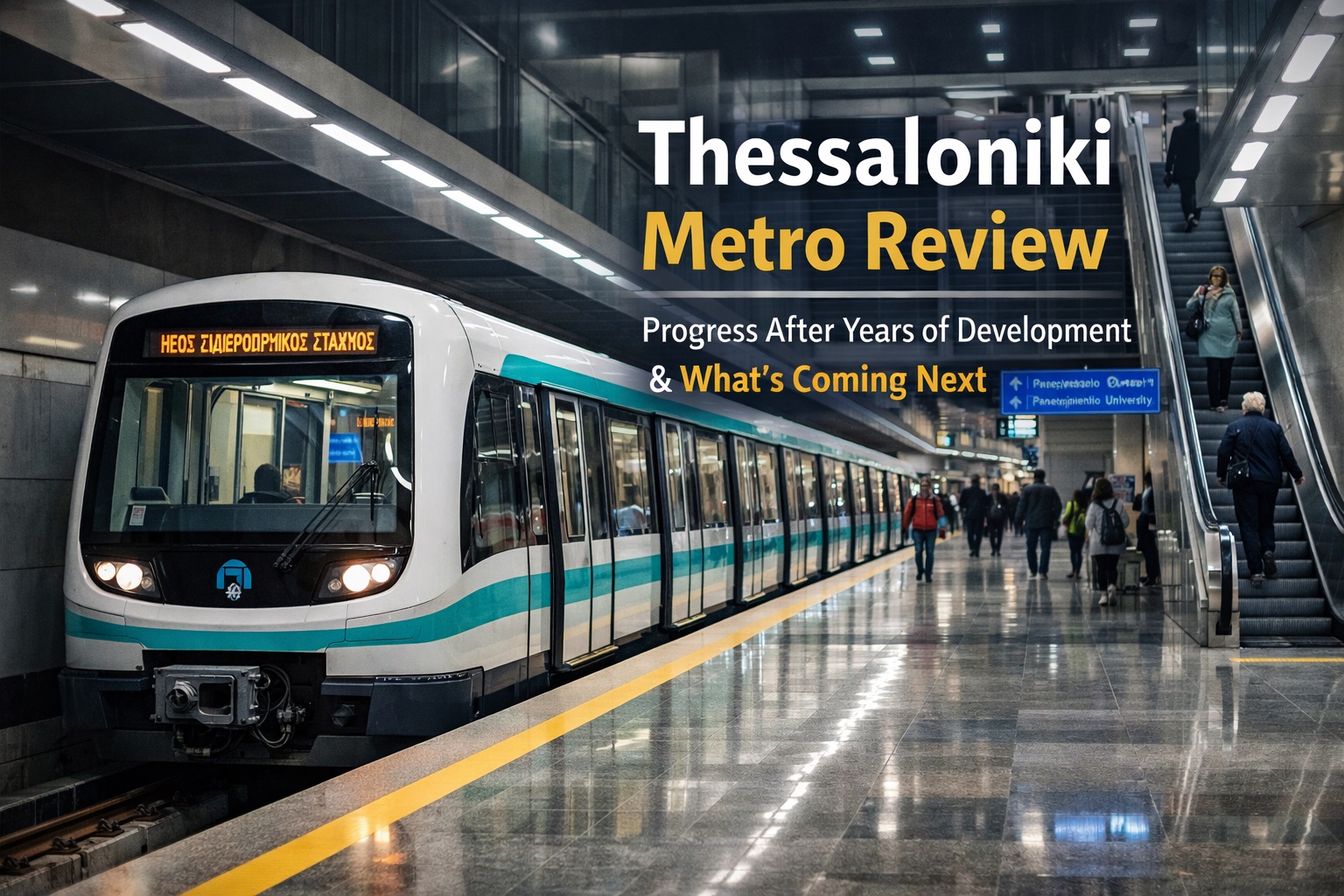
After decades of anticipation, Thessaloniki’s long-awaited metro system has finally become a reality — and it’s already reshaping daily life in Greece’s second largest city. Here’s a clear look at how the project has unfolded, what’s working well now, and what commuters can expect next.
🚇 A Long Road to Opening
The Thessaloniki Metro officially opened on November 30, 2024, marking a historic moment for a project that had been under construction for decades, often delayed due to archaeological finds and financial challenges.
The initial operational line stretches roughly 9.6 km with 13 stations, linking key urban areas including the city centre, university districts, and the main railway station. Designed with modern technology — including automated, driverless trains — the metro aims to drastically reduce travel times and ease road congestion.
📊 Early Impact and Operations
Since starting service, the metro has already made a noticeable difference in Thessaloniki’s urban fabric:
- Traffic relief: Early studies show reductions in private vehicle use in central areas, easing pressure on major roads.
- Economic activity: Retail and business activity near stations has grown, as accessibility increases.
- Daily ridership: The metro is expected to serve hundreds of thousands of passengers each day, offering a faster, reliable alternative to buses.
There have been some “growing pains,” typical of new transport systems — from occasional service issues to adjusting timetables — but overall reception among users has been positive, especially after years of construction disruption.
📍 What’s Next: Extensions and New Stations
The Thessaloniki Metro is far from finished. Expansion plans will significantly enlarge its reach and benefit more neighbourhoods:
🟦 Kalamaria Extension (Line 2)
This is the most imminent phase of expansion. Originally expected in late 2025, the timetable has shifted with local officials targeting early 2026 for opening.
- Five new stations are planned in the Kalamaria direction: Nomarchia, Kalamaria, Aretsou, Nea Krini and Mikra.
- This extension will improve access to eastern suburbs and connects closer to the airport corridor.
- Temporary suspensions of the current central line have been scheduled at times to allow integration and safety testing of the expanded infrastructure.
🚉 Future Network Expansion
Beyond Kalamaria, broader plans aim to extend the metro to additional districts:
- Western and northern lines are in development for future phases, potentially adding significant mileage and dozens more stations over the next decade.
- Long-range plans show potential connection toward Macedonia Airport and other key nodes, helping unify regional transit.
🏙️ The Bigger Picture
The metro is part of a wider set of infrastructure investments across Thessaloniki, including the Flyover expressway project, aimed at transforming mobility and boosting tourism, commerce and commuter comfort.
For a city long constrained by traffic and sprawling urban growth, these developments mark a serious leap toward a modern transit network — one that promises to continue evolving in the years ahead.
The Thessaloniki Metro has moved from years of construction to active service with a modern, 13-station core line that’s already easing urban mobility. Extensions like the Kalamaria branch will soon come online, followed by more ambitious network growth, helping shape the future of transportation in Greece’s second-largest city.