
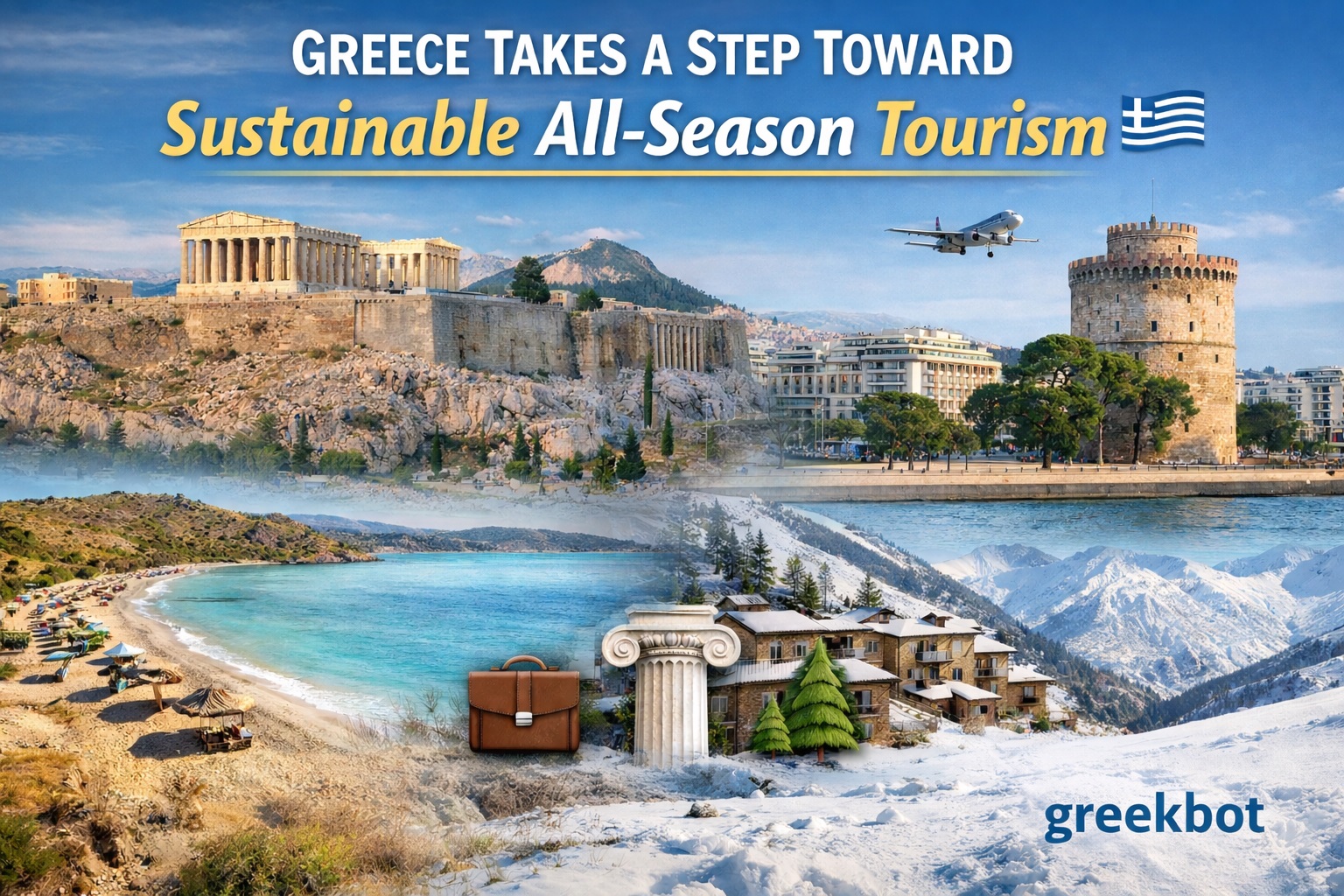
Year-round tourism in Greece is shifting from a long-term ambition to an operational reality, as an increasing number of destinations report stable visitor activity beyond the traditional summer peak. Travel demand is now spread across more months of the year, driven by business travel, conferences, cultural programming, and stronger air connectivity.
Major cities, conference-oriented regional hubs, and destinations with diversified tourism offerings show the greatest resilience to seasonality. Even traditionally summer-focused resorts are extending their seasons, with flights starting earlier in the year and continuing well into autumn. What was once largely a policy goal is now reflected in real operating data across both urban and regional markets.
This evolution does not suggest uniform demand throughout the year. Instead, it points to longer operating periods, better use of hospitality infrastructure, and reduced pressure during peak summer months—key elements of a more sustainable tourism model.
Major cities lead Greece’s all-season transition
Athens remains at the forefront of this shift, increasingly established as a twelve-month destination. While growth has moderated following the strong post-pandemic rebound, hotel performance indicators continue to trend positively.
Benchmarking data from the Athens–Attica and Argosaronic Hotel Association shows steady improvement across core metrics in 2025, reinforcing the capital’s position as a full-year market. Visitor volumes have increased during months that historically saw weaker demand, particularly in the first and final quarters of the year.
Athens maintains solid occupancy levels compared with other European capitals. Although average room rates remain below those of leading competitors, industry stakeholders see this as an opportunity to enhance product quality and strengthen pricing power. Continued investment in cultural offerings, urban appeal, and conference infrastructure supports the city’s dual role as both a leisure and business destination throughout the year.
Thessaloniki attracts a broader visitor mix
Thessaloniki is also extending its tourism season, now operating at meaningful levels for roughly ten months annually, compared with about nine in previous years. Softer activity is largely limited to late November through late January, excluding the holiday period. Improved air connectivity and stable pricing have reinforced this upward trend.
The city benefits from a diverse mix of leisure, regional, and business travelers, with conferences and organized events acting as key demand drivers. Core source markets include the United States, Turkey, Israel, Germany, Cyprus, and neighboring Balkan countries.
Local tourism authorities are expanding promotion in Western markets and working to spread tourism benefits more evenly across the local economy, including dining and retail. While average room rates remain well below Athens levels, ongoing hotel upgrades and new investments aim to gradually close this gap.
Regional destinations gain momentum
Beyond Greece’s two largest cities, several regional centers are making measurable progress toward year-round tourism. Alexandroupoli continues to strengthen its cross-border appeal, generating steady short-stay demand through targeted promotion, business cooperation, and coordinated outreach. Visitors primarily come from Turkey and nearby Balkan countries, with a focus on nature, culture, gastronomy, and experience-based tourism across all seasons.
Ioannina also records tourism activity for approximately ten months each year. Demand is supported by conferences—particularly in medical and technology sectors—academic travel, corporate events, and university-related movement. International arrivals dominate the warmer months, while winter demand relies more heavily on neighboring markets such as Albania.
Airport upgrades completed after 2023 have improved growth prospects, while existing conference facilities can currently host around 2,000 delegates, rising to about 3,500 when accompanying participants are included. Additional capacity could further strengthen demand.
Peloponnese demonstrates four-season potential
Several destinations in the Peloponnese illustrate how diversified tourism products can support a longer season. Areas such as Kalamata, Nafplio, Loutraki, and Corinth combine coastal and inland experiences, cultural heritage, favorable climate, and improving infrastructure, enabling more consistent activity throughout the year.
Academic research suggests the region has the structural foundations needed for a sustainable year-round tourism model, relying more on efficient use of existing resources than on expanding accommodation supply.
Air traffic patterns support this outlook. Regional airports now operate flights from late winter through autumn, while Kalamata International Airport runs seasonal routes from late February to late November—significantly extending the traditional tourism window.
Together, these developments signal a steady but meaningful shift toward a more balanced, resilient, and sustainable tourism landscape across Greece.
Source: Greekreporter Edited by Bernie