
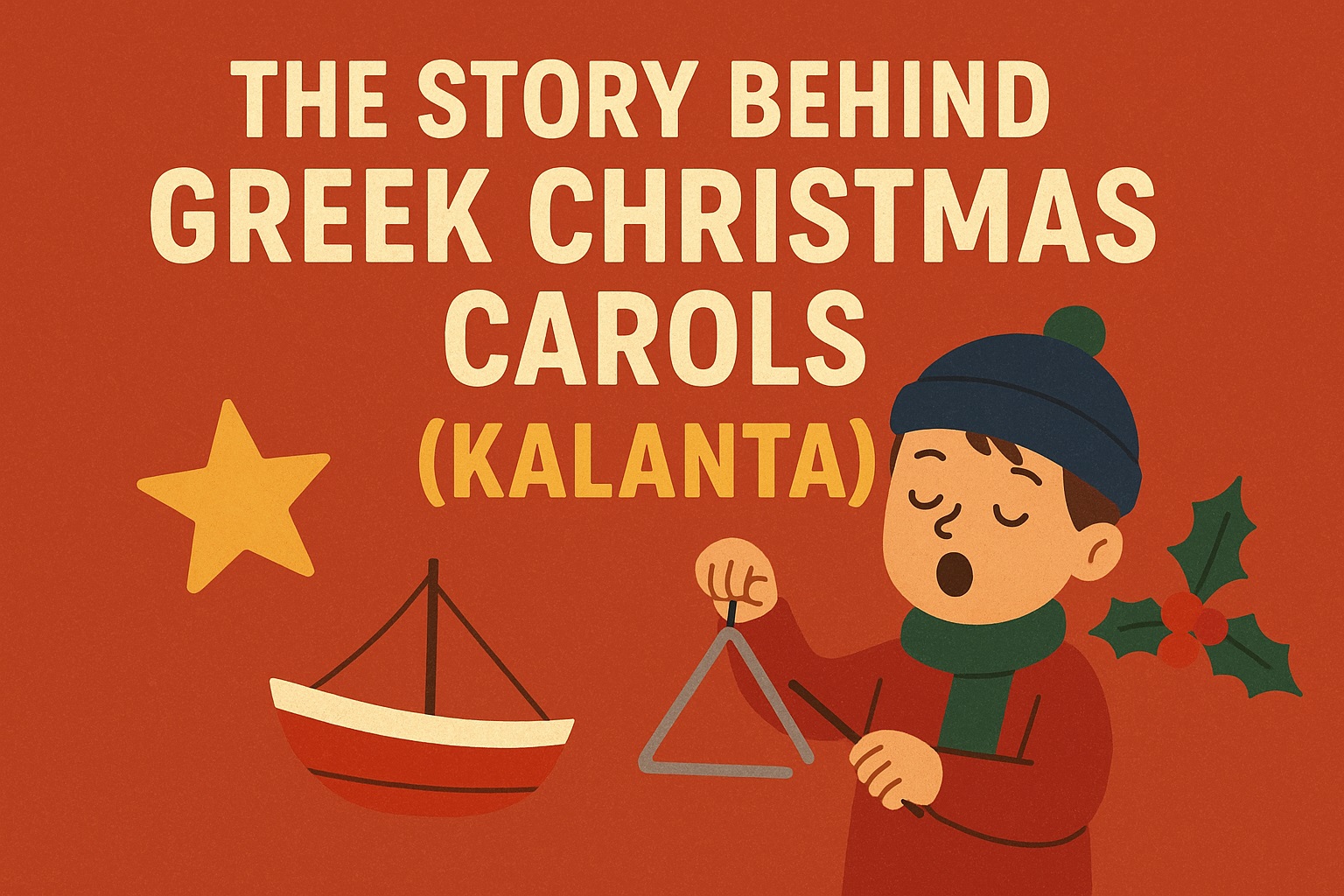
Greek Christmas wouldn’t be complete without the joyful sound of Kalanta — traditional carols sung by children carrying small triangles, drums, or even homemade boats. These melodies have echoed through Greek villages and cities for centuries, holding stories of faith, hospitality, and community spirit.
A Tradition Rooted in Antiquity
Though today deeply linked to Orthodox Christmas, the origins of Kalanta are much older. Their roots reach back to ancient Greece, where children went door to door during festivals singing songs of good fortune and receiving small gifts in exchange. These ancient “eirine” or festive songs eventually blended with Christian themes after the 4th century, creating the Kalanta we know today.
Symbolism in Every Note
Greek Kalanta aren’t just songs — they’re blessings in musical form.
- Wishes for prosperity: Lyrics often bless each home with health, wealth, and good harvest.
- Religious retellings: The songs recount the Nativity, the arrival of the Three Kings, and the hope brought by Christ’s birth.
- Good-luck customs: Children tap triangles or drums to “wake” good fortune for the coming year.
The Famous Days of Kalanta
Three major feast days in Greece feature Kalanta:
- Christmas Eve (24 December) – Children sing about the birth of Christ and offer blessings.
- New Year’s Eve (31 December) – Dedicated to St. Basil, these Kalanta bring wishes for abundance and renewal.
- Epiphany Eve (5 January) – These songs focus on the blessing of waters and the baptism of Christ.
Each set of Kalanta has variations depending on the region — from the Aegean islands to mountainous Macedonia — showcasing Greece’s rich musical diversity.
A Tradition That Connects Generations
Even today, children wake up early on Christmas Eve and go house to house singing Kalanta. Families open their doors, offer coins, sweets, or traditional treats, and exchange warm holiday greetings. The simple act of opening the door symbolizes welcoming blessings into the home.
How Kalanta Remain Alive Today
Despite modernization, Kalanta remain beloved. Schools rehearse them, villages host live performances, and musicians release contemporary versions that blend traditional instruments with modern arrangements. Across Greece and the diaspora, the sound of a child’s triangle still signals the beginning of the festive season.
Why Kalanta Matter
Kalanta endure because they bring people together. They remind Greeks of their shared roots, their connection to family and faith, and the spirit of generosity that defines the holiday season. Beyond music, they are a celebration of continuity, culture, and heartfelt blessings passed down through generations.