
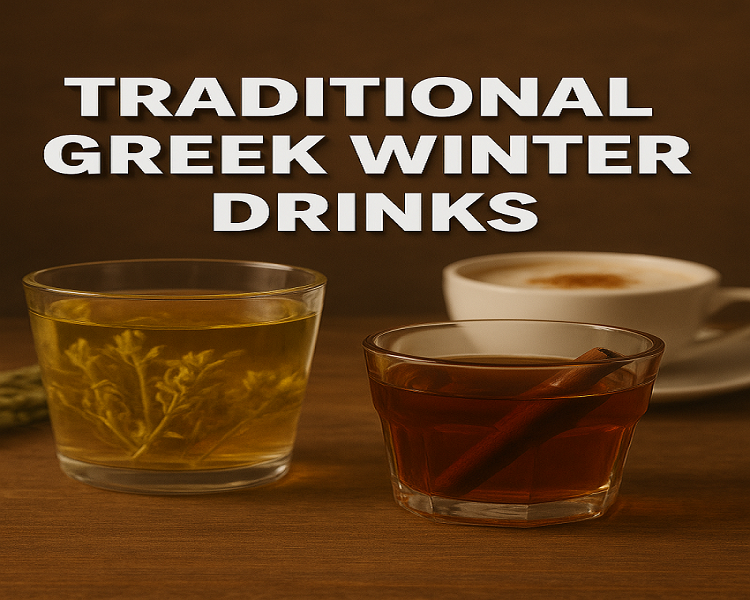
When winter settles over Greece, life slows down, fires are lit, and cups are filled with drinks that do more than warm the hands—they comfort the soul. Long before cafés served seasonal lattes, Greeks relied on time-honored winter drinks rooted in nature, tradition, and hospitality. From herbal infusions gathered on rocky mountainsides to honey-sweetened spirits shared among friends, these beverages tell the story of Greek winter.
Mountain Tea (Tsai tou Vounou): Nature’s Winter Remedy
Perhaps the most iconic Greek winter drink is mountain tea, known locally as tsai tou vounou. Made from dried stems, leaves, and flowers of the sideritis plant, this herbal tea grows wild at high altitudes across Greece.
Mountain tea has been consumed for centuries, prized not only for its earthy, slightly floral taste but also for its health benefits. Greeks drink it to soothe sore throats, fight colds, and boost the immune system during the colder months. It’s typically served plain or with a squeeze of lemon or a spoonful of honey, making it both simple and deeply comforting.
On a rainy winter evening, a steaming cup of mountain tea feels like a return to something ancient and grounding.
Rakomelo: Sweet Heat in a Glass
If mountain tea is gentle and soothing, rakomelo is bold and warming. This beloved winter drink is made by gently heating raki (or tsipouro) with honey and spices—most commonly cinnamon and cloves.
Rakomelo is especially popular in colder regions and on Greek islands during winter, where it’s served hot in small glasses. It’s not just a drink; it’s a social ritual. Friends gather around wooden tables, sharing stories while sipping rakomelo that warms the chest and loosens conversation.
Often enjoyed after a meal or on chilly nights, rakomelo perfectly balances sweetness, spice, and strength.
Salepi: The Forgotten Winter Comfort
Less common today but deeply nostalgic is salepi, a thick, creamy hot drink made from powdered orchid root. Once sold by street vendors in Greek cities during winter, salepi has a distinctive texture and a mildly sweet flavor, usually enhanced with cinnamon.
Salepi was traditionally believed to provide energy and warmth, making it ideal for cold mornings. While harder to find now, it remains a symbol of old-world Greek winters and is occasionally revived in traditional cafés and festivals.
Hot Wine & Spiced Spirits
During winter celebrations and Christmas markets, Greeks also turn to hot wine infused with spices, citrus peels, and honey. Though influenced by broader European traditions, it has been embraced into Greek winter culture, especially in mountainous regions.
Other variations include warming local spirits with herbs and spices, often homemade and passed down through family recipes.
More Than Drinks: A Taste of Greek Winter
Traditional Greek winter drinks are about more than warmth. They reflect a way of life shaped by nature, seasonality, and togetherness. Whether it’s a quiet moment with mountain tea or a lively night fueled by rakomelo, these drinks connect the present to generations past.
In every sip, there’s a reminder that Greek winter isn’t just cold—it’s cozy, communal, and rich with tradition.