
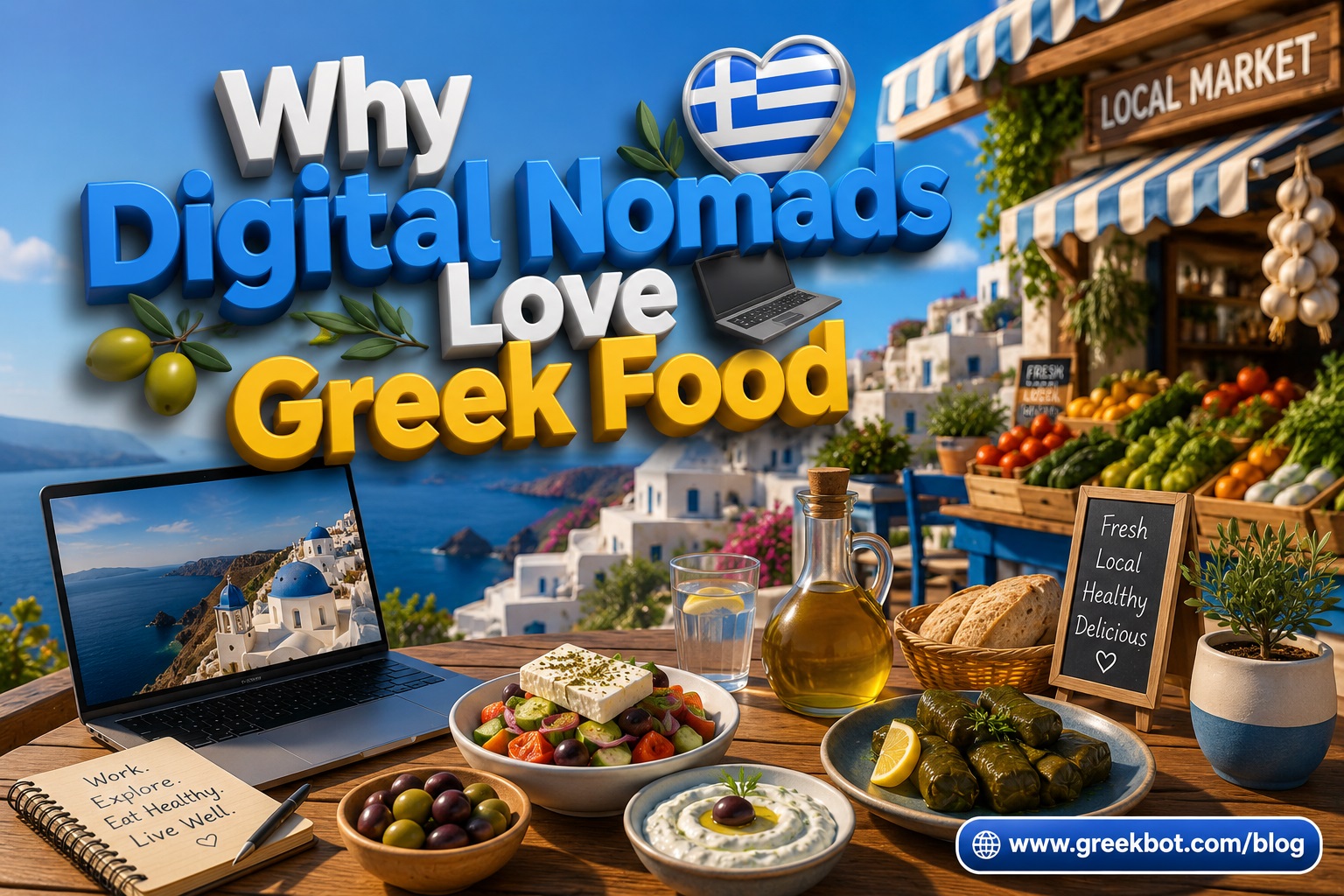
The rise of remote work has given professionals the freedom to choose where they live and work. For many digital nomads, Greece has become a favorite destination thanks to its stunning landscapes, affordable lifestyle, reliable internet infrastructure, and rich cultural heritage. However, one often-overlooked benefit of living and working in Greece is its exceptional cuisine.
From bustling local markets to traditional family-run tavernas, Greek food offers much more than delicious meals. It provides digital nomads with a healthier lifestyle, improved productivity, cost-effective living, and deeper cultural connections. In many ways, Greek cuisine is a secret advantage that enhances the entire remote work experience.
The Power of the Mediterranean Diet
Greek cuisine is built around the Mediterranean diet, widely regarded as one of the healthiest eating patterns in the world. Fresh vegetables, fruits, legumes, olive oil, fish, whole grains, and herbs form the foundation of many traditional dishes.
For digital nomads who spend long hours working on laptops, proper nutrition plays a critical role in maintaining focus and energy. Unlike heavily processed foods that can lead to energy crashes, Greek meals provide sustained nourishment throughout the day.
A typical Greek lunch might include a fresh salad, grilled fish, olive oil, and seasonal vegetables—offering a balanced combination of healthy fats, protein, and nutrients that support both physical and mental performance.
Local Markets: Fresh Food at Affordable Prices
One of the first things many newcomers notice in Greece is the abundance of local markets. Weekly farmers’ markets, known as Laiki Agora, are a staple of Greek life and provide access to fresh produce directly from local growers.
For digital nomads, these markets offer several advantages:
Lower Food Costs
Buying directly from local farmers often costs significantly less than shopping at major supermarkets. This allows remote workers to enjoy high-quality ingredients while keeping their living expenses under control.
Fresh and Seasonal Produce
Local markets encourage healthier eating by offering fruits and vegetables harvested at peak freshness. Seasonal shopping also introduces nomads to authentic Greek ingredients and recipes.
A More Sustainable Lifestyle
Purchasing locally sourced food reduces transportation costs and environmental impact while supporting small businesses and farming communities.
Turning Everyday Meals into Cultural Experiences
Many digital nomads travel not only to work remotely but also to immerse themselves in new cultures. Food is one of the easiest and most enjoyable ways to connect with local traditions.
Greek cuisine reflects centuries of history, regional influences, and family customs. Whether enjoying fresh seafood on an island, tasting local cheeses in the countryside, or sharing meze with friends at a neighborhood taverna, every meal becomes an opportunity to experience authentic Greek culture.
Unlike fast-paced dining cultures found elsewhere, Greek meals often encourage conversation, relaxation, and social interaction—qualities that many remote workers find refreshing.
Better Work-Life Balance Through Food Culture
Digital nomads often struggle to separate work from personal life. The flexibility of remote work can sometimes lead to longer hours and burnout.
Greek food culture promotes a different approach. Meals are viewed as important moments of the day rather than quick interruptions between tasks. Taking time to enjoy lunch at a local café or dinner with friends encourages healthier routines and creates natural breaks from work.
This slower pace can improve mental well-being, reduce stress, and help remote workers maintain a healthier work-life balance.
Cafés: The Nomad-Friendly Workspace
Greece’s café culture also complements the digital nomad lifestyle. Across cities and islands, cafés serve as informal workspaces where remote professionals can answer emails, attend virtual meetings, or work on projects while enjoying quality coffee and light meals.
Many cafés offer comfortable seating, welcoming atmospheres, and a steady flow of locals and travelers. Combined with excellent food and beverages, they provide a productive alternative to traditional coworking spaces.
Building Community Through Shared Meals
One challenge many digital nomads face is loneliness. Constant travel can make it difficult to establish meaningful relationships.
Greek dining traditions naturally encourage social interaction. Shared plates, communal meals, and welcoming hospitality make it easier to meet locals and fellow travelers alike. Whether attending a village festival, dining with new friends, or simply chatting with vendors at a local market, food often becomes the starting point for genuine connections.
More Than Food—A Lifestyle Advantage
What makes Greek cuisine special is that it extends beyond nutrition. It supports a complete lifestyle that aligns perfectly with the goals of many digital nomads: healthier living, stronger community connections, better work-life balance, and deeper cultural experiences.
From filling a shopping basket at a local market to enjoying a sunset meal by the sea after a productive workday, Greek cuisine transforms everyday routines into meaningful experiences.
For digital nomads, Greece offers far more than beautiful scenery and affordable living. Its cuisine serves as a powerful lifestyle advantage that enhances productivity, wellness, and cultural immersion. Fresh ingredients, vibrant local markets, healthy eating habits, and a strong sense of community all contribute to a richer and more fulfilling remote work experience.
In Greece, the journey from laptop to local market isn’t just about finding food—it’s about discovering a healthier, more connected way of life.