
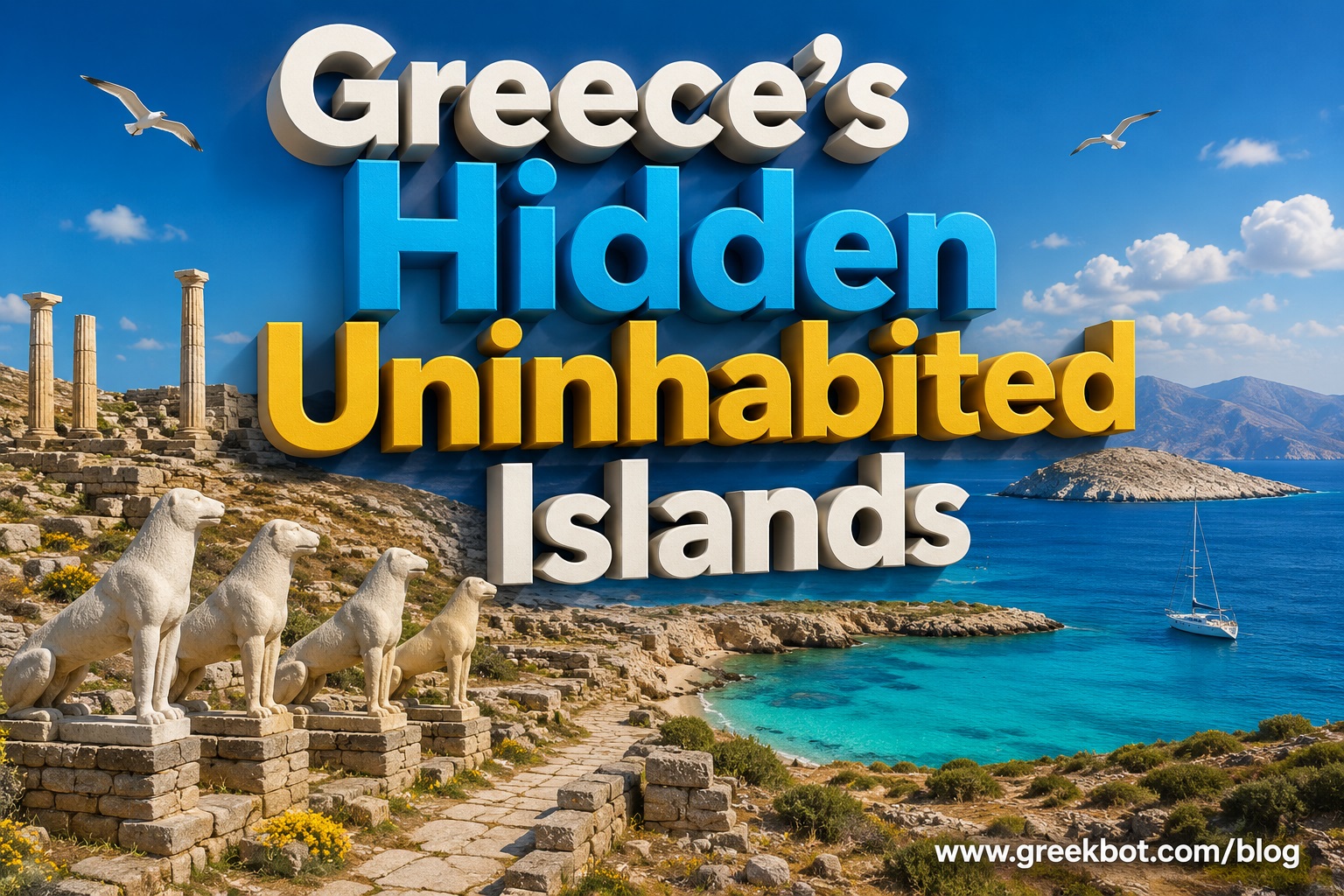
Greece is turning fresh attention toward a collection of uninhabited islands where mythology, archaeology and untouched scenery continue to define the experience centuries after permanent communities vanished.
The islands of Dryonissi, Delos, Filizi and Polyaigos each reveal a different side of isolation — from sacred ruins and Bronze Age relics to hidden coves, sea caves and crystal-clear turquoise waters.
While destinations like Mykonos and Santorini attract millions of summer visitors every year, these quieter islands showcase a more peaceful side of the Aegean, shaped by history, preservation and raw natural beauty.
Delos, the best known of the group, remains one of the Mediterranean’s most significant archaeological treasures and holds UNESCO World Heritage status. In Greek mythology, the island is believed to be the birthplace of Apollo and Artemis after their mother, Leto, sought sanctuary there.
Over time, Delos evolved into a powerful religious and commercial hub of the ancient Greek world. Today, visitors can still wander through the remains of temples, sanctuaries, marketplaces and residential districts that once supported a thriving population.
Among its most famous landmarks is the Terrace of the Lions, where replica marble lions now stand guard while the originals are preserved indoors for protection.
Other major attractions include the Theatre Quarter, the House of the Dolphins with its intricate mosaics, the Temple of Isis and Mount Kynthos, which offers sweeping views across the Cyclades.
Unlike most Greek islands, Delos has no hotels, restaurants or permanent civilian residents. Overnight stays are prohibited to protect the archaeological site, with only guards, archaeologists and maintenance staff allowed to remain after sunset. The island has remained largely uninhabited since the 7th century AD, helping preserve its historic authenticity.
Most visitors reach Delos by boat from nearby Mykonos and are encouraged to carry water and sun protection, as the exposed island offers very little shade or modern facilities.
Further southeast near Paros lies Dryonissi, a rugged limestone islet that may appear empty at first glance. Archaeological excavations, however, have uncovered pottery fragments, stone tools and evidence of human activity dating back to the Early Cycladic era between 3000 and 2000 BC.
Researchers have also discovered low agricultural walls used to protect crops from strong winds, along with signs of ancient limestone quarrying activity.
Despite its small size and barren appearance, Dryonissi once played a role in the wider maritime and trading networks of the ancient Aegean.
Filizi, another tiny islet near Santa Maria on Paros, offers an even quieter escape. Although visitors can now reach it by swimming, experts believe it was once connected to Paros by a narrow land bridge that disappeared over time due to geological changes.
Artifacts discovered on Filizi date from the 8th to 5th centuries BC, an era marked by expanding Greek city-states, flourishing trade routes and artistic development across the Mediterranean.
Unlike Delos, Filizi contains no major ruins or monuments. Its charm lies instead in its silence, simplicity and traces of earlier human life scattered across the rocky landscape.
Polyaigos, located near Kimolos, is the largest island in the group and among the least populated places in the Cyclades. Its name translates to “many goats,” reflecting the animals that once grazed across the island.
The island is famous for dramatic volcanic cliffs, obsidian deposits and vivid turquoise coves that attract sailing boats and yachts during the summer season.
Sea caves along its coastline also serve as breeding grounds for the endangered Mediterranean monk seal, one of Europe’s rarest marine mammals. With limited tourism and no freshwater supply, Polyaigos has managed to preserve much of its wild and untouched character.
Archaeologists have uncovered evidence of Bronze Age mineral extraction on the island, although its harsh conditions prevented the establishment of lasting settlements.
A lighthouse on Polyaigos still guides ships crossing the southern Aegean toward Crete, continuing the island’s centuries-old connection to maritime navigation.
Together, these four islands highlight how Greece’s uninhabited landscapes continue to blend mythology, archaeology, environmental protection and tourism.
Rather than forgotten places abandoned by history, the islands preserve the legacy of ancient trade, farming, quarrying, religion and seafaring that once shaped the Aegean world.
For travellers searching for quieter destinations away from crowded tourist hotspots, Delos, Dryonissi, Filizi and Polyaigos offer a different vision of Greece — one where ruins, geology and the sea remain the true storytellers.
Source: ftnnews Edited by Bernie