
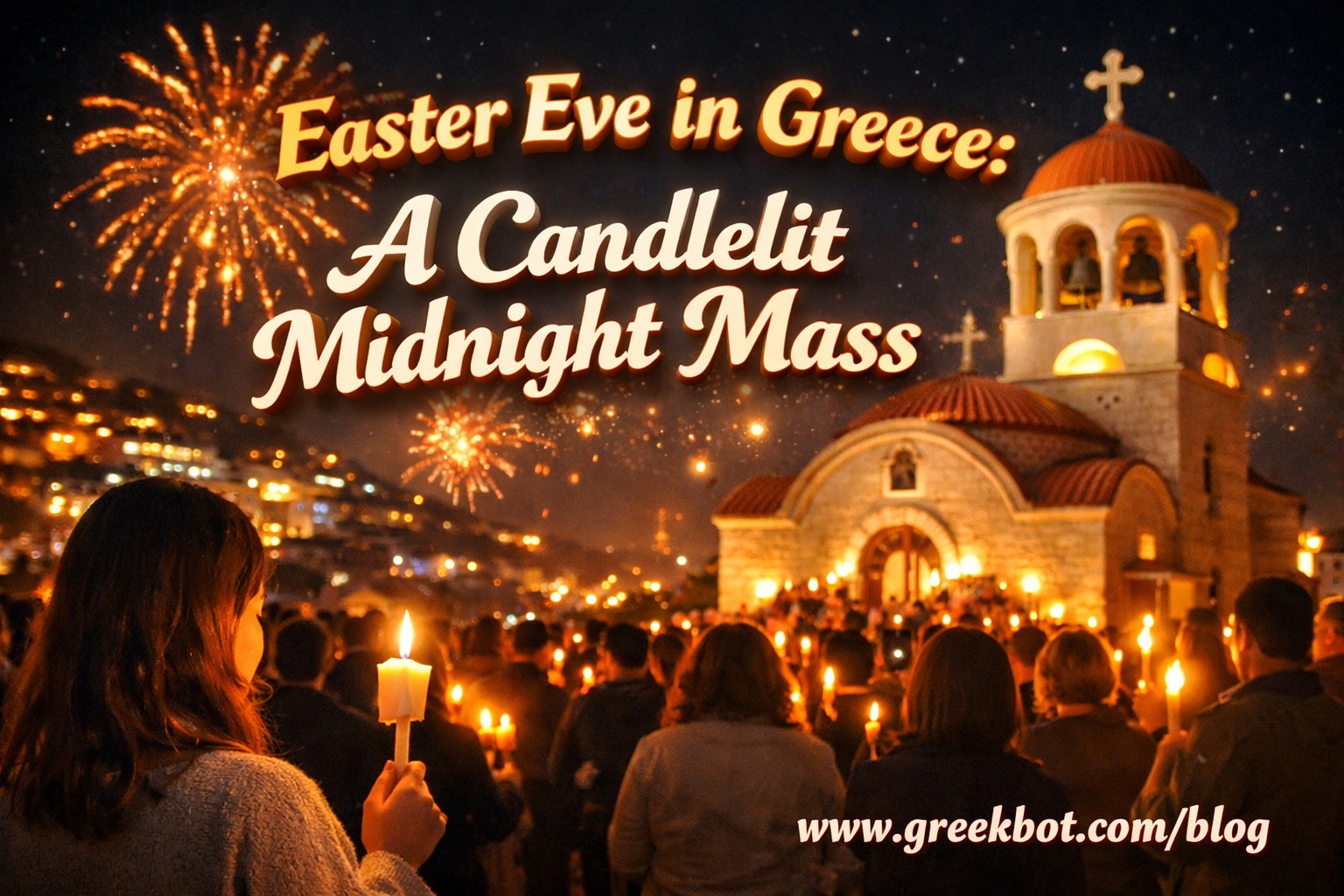
Easter Eve in Greece known as Holy Saturday is one of the most captivating and meaningful nights you can experience in the country. As the grand finale of Greek Orthodox Holy Week, it combines deep religious devotion with vibrant cultural traditions that transform towns, villages, and islands into glowing scenes of unity and celebration.
The Build-Up to Midnight
Throughout the evening, a quiet anticipation settles over Greece. From bustling neighborhoods in Athens to picturesque island settings like Mykonos and Santorini, people begin to gather outside local churches dressed in their best attire. The streets are softly lit, and families walk together, often carrying beautifully decorated candles known as lambades.
These candles are not just decorative—they symbolize faith, hope, and the light of resurrection. Children often receive specially designed lambades from their godparents, adding a personal and festive touch to the evening.
The Midnight Moment
As the clock approaches midnight, the atmosphere becomes reverent and still. Then comes the defining moment: the priest emerges with the “Holy Light,” said to be brought from Jerusalem, and begins to share it with the congregation.
Within moments, the darkness is replaced by a sea of flickering candlelight. The priest proclaims “Christos Anesti” (“Christ is Risen”), marking the resurrection of Jesus Christ. The crowd responds joyfully, “Alithos Anesti” (“Truly, He is Risen”).
Church bells ring loudly, fireworks burst into the sky, and the once-quiet night erupts into celebration. It’s a breathtaking fusion of spirituality and festivity—one that leaves a lasting impression on both locals and visitors.
A Tradition of Light and Blessings
After the service, many people carefully carry their lit candles home, protecting the flame from the wind. This flame is considered sacred, and it is customary to use it to bless the home by making the sign of the cross above the doorway with the candle’s soot.
This simple act reflects a deep-rooted belief in protection, renewal, and good fortune for the household in the year ahead.
Breaking the Fast
Easter Eve also marks the end of Lent, a period of fasting and reflection. Once back home, families gather around the table to enjoy magiritsa, a traditional soup made to gently break the fast. Though simple, it is rich in symbolism and flavor.
The night often continues with laughter, conversation, and preparation for the grand Easter Sunday feast, which typically includes roasted lamb, red-dyed eggs, and an abundance of traditional dishes.
A Cultural Experience Like No Other
Experiencing Easter Eve in Greece goes far beyond attending a religious service—it’s about becoming part of a living tradition that has been passed down through generations. Whether you’re deeply spiritual or simply a traveler seeking authentic cultural moments, this night offers something truly special.
From the glow of candlelight to the sound of bells and fireworks, from quiet reflection to joyful celebration, Easter Eve in Greece captures the essence of community, faith, and renewal.
If you ever have the chance to be in Greece during Easter, don’t miss this unforgettable experience—it’s one of the most beautiful ways to witness the heart and soul of Greek culture.